


The health of the nation depends on the digestion of the Prime Minister.
—Voltaire
My travel to Korea and Japan has had a profound impact on me that I’ve yet to unpack.
Partially because Korea was my birthplace, so I have a special connection to it.
But mostly because of the way the people live. And while I’ve always loved Korean and Japanese food, I had no idea just how connected food was to the way they live.
Korea has a culture that has a name: pali-pali.
It means hurry, hurry. It doesn’t mean to rush everywhere. It means to advance in no time.


When I was born (1968), Korea was one of the poorest countries in the world with per capita GDP at less then $200, putting it below much of sub-Saharan Africa. Now, it sits among the world’s top 15 economies, a global tech giant built in less than a single lifetime.
After freedom from Japan’s occupation, Korea saw what was happening in the West, and they adopted this pali-pali culture to meet it — and beyond. They made it. Not just economically. The world now loves their food, movies, and music.
But the cost was high.
You can’t tell because they’re so well put together, but they’re tired.
They have one of the highest suicide rates in the world. The burden to achieve is so high, they’ve stopped bringing children into the world, driving the fertility rate down to 0.72, the lowest in human history and well below the 2.1 needed to sustain a society.
Both Korea and Japan drink a lot of coffee, like the U.S.
But neither Korea or Japan walk around their streets with lattes in hand.
Nor do they eat walking or driving around.
They sit in cafes, and they eat warm.
In Japan, they have a word for walking while eating or drinking: Aruki-kui. And it’s considered bad manners.
Korea looks at it as a lack of self-regulation or dignity, a sign that your time is completely managing you rather than the other way around.
As densely populated their cities are — Seoul, Busan, Osaka, Tokyo — people aren’t raging. Amid the density, there’s efficiency.
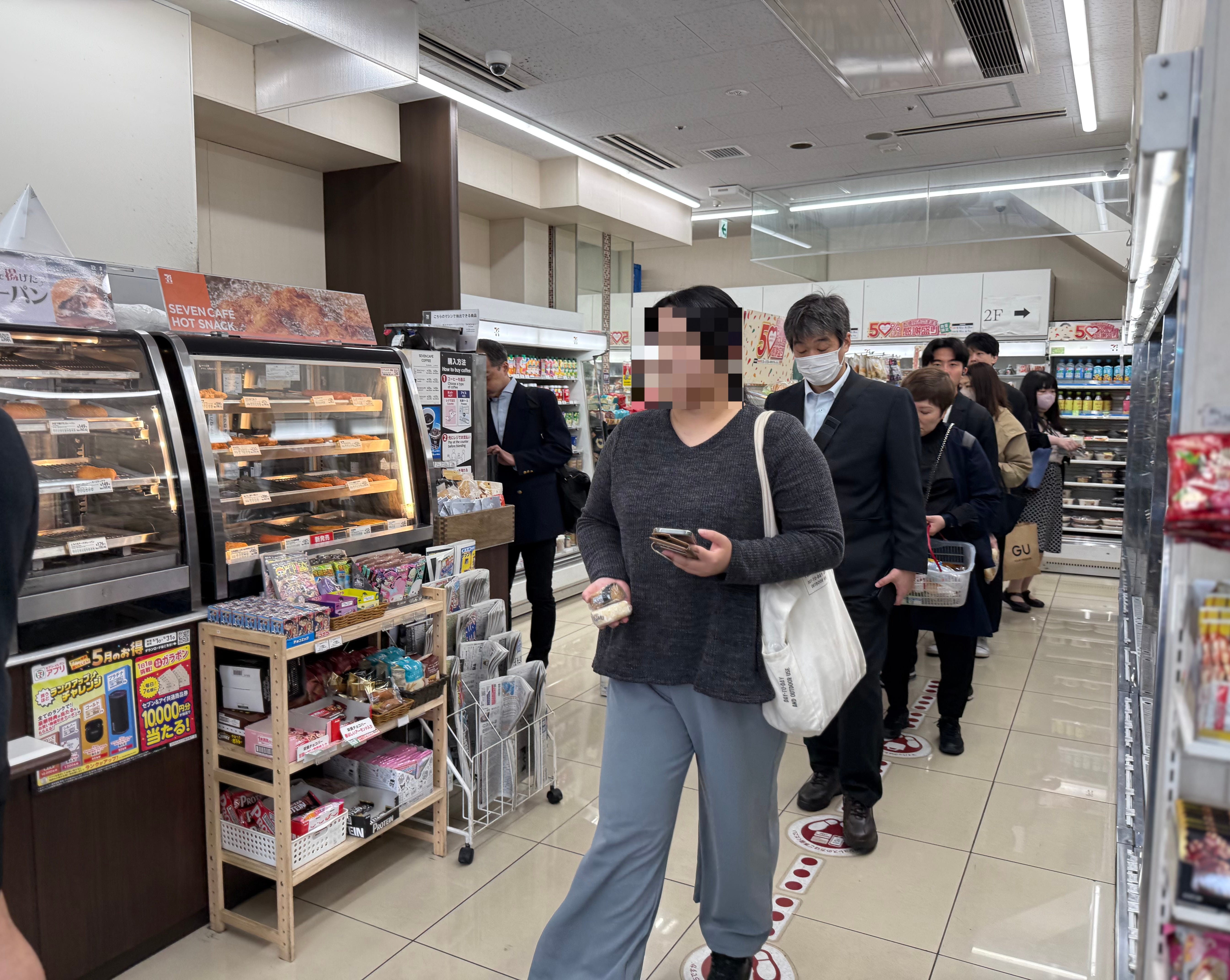
No one is raging over where the frickin line begins and ends — the lines are incredibly clear.
People stand on one side of the escalator so those that want to walk can move through on the other side.
They move through spaces like they’re of one mind.
When one accidentally bumps into another, there’s no raging. They just move on.
They respect space. For meals. And for each others’ stuff.
When I go to other parts of the world, including the U.S., I’m reminded to keep my phone in my zipped-up pocket. Watch for pick-pocketers.
In Korea and Japan, to save a seat at a cafe, I can literally place my purse down on the table and walk away. Stand in line. Go to the bathroom. Even if the table is outside on the corner of busy.
Growing up in Chicago, I was made to believe that the denser the population, the more violent people become. Yet Tokyo, a metropolis of 37 million people, consistently ranks as one of the safest cities on earth, turning the myth of urban chaos completely on its head.
Back home, there’s something else happening. A lack of respect — for space and property. And for each other.
Yes, suicide may be a problem in Korea. But mass shootings aren’t. Pick-pocketing isn’t. There’s no fear of personal attack.
Safety in Japan and Korea is rooted in Wa (harmony) and a deep-seated aversion to Meiwaku (inflicting trouble/shame on others).
Stealing a phone isn’t seen just as a crime against the owner but as a rupture in the safety of the entire space. The social cost of breaking the collective trust is devastating.
Voltaire said, the health of the nation depends on the digestion of the Prime Minister.
I can’t help but make this correlation.
Breakfast begins with the country’s version of miso, rice, fish, and pickled vegetables. Warm. People aren’t shoveling food down and treating their bodies like trash compacters. The rest of the day’s meals is also warm. Soups, more pickled or fermented veggies, nori, fish, meat, rice, green tea.


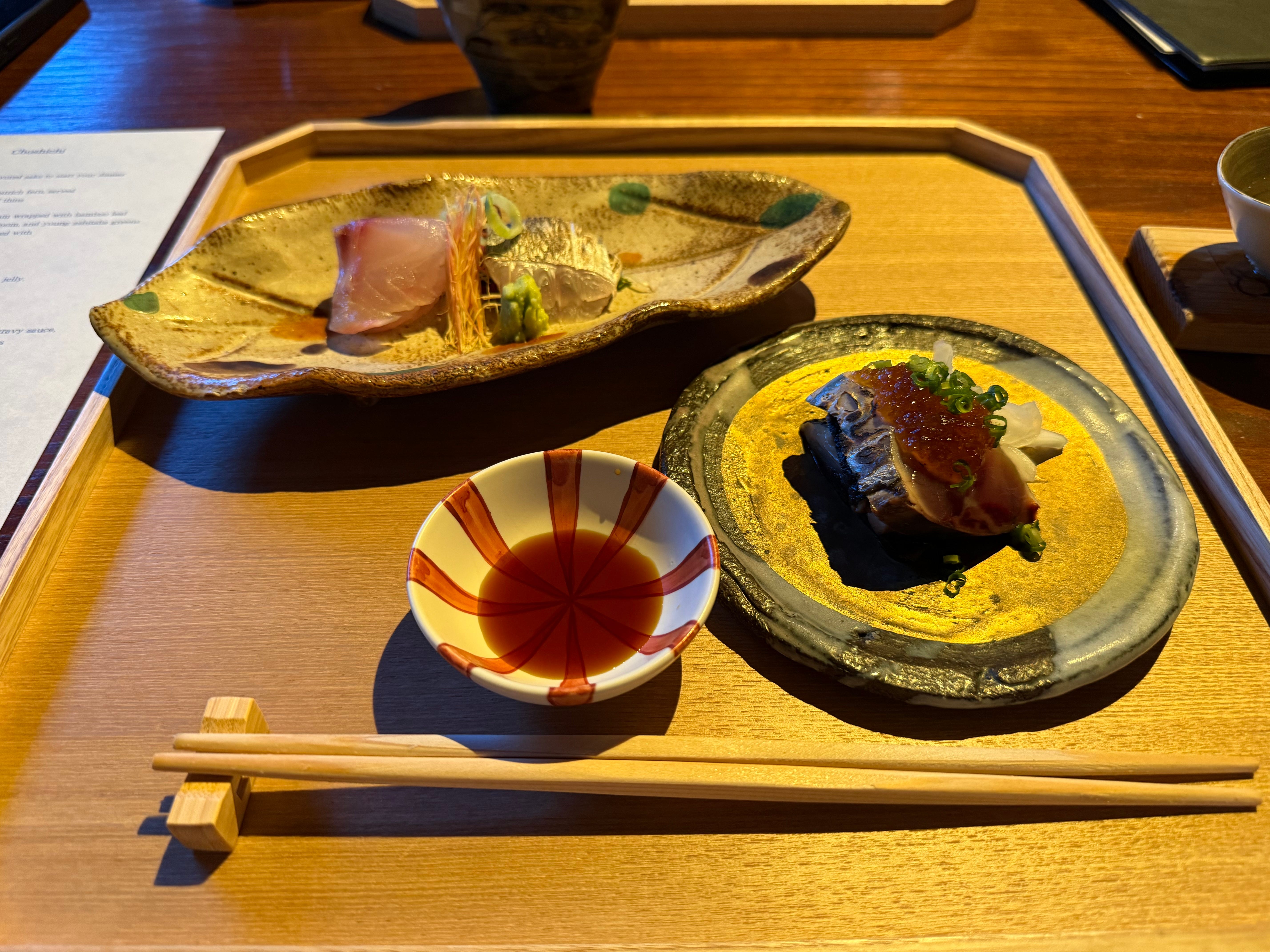
They make the most incredible sweets. Their ice cream, sweet yams, Monte Blancs, and red bean desserts are to die for. Just sweet enough to be incredibly delicious without feeling like you’re going to sugar crash.
Helped by their infrastructure, which fully supports walking and taking public transportation. You can’t help but get 10-20,000 steps in every day. Even as a local.


The sounds in Japan’s intersections, elevators, and train stations are chosen specifically to calm the nervous system. They’re intentional that way.
Having said all that, I feel lucky to live where I do (because of something we have that I’ll cover in a bit).
And to be able to travel and see other parts of the world. It lets me see what they have right. What we can adopt here. What we can bridge…
Neither Korea nor Japan have garbage cans or alleyways with garbage dumpsters. This makes you mindful of the garbage you make. When you make garbage, it’s your personal responsibility, and you carry it with you. — I feel like I’ve been Marie Kondo’d while there. Already leaning minimal, I’ll be working on creating less garbage and minimizing my belongings to keep only what I absolutely love and move the rest on for others to enjoy.
Korea and Japan are masters of “scraper” foods: foods that not only nourish the body and are “heart-healthy” but scrape the ama (toxins) that are floating or getting stuck along our arterial walls and flush them through. They sit and eat warm, scraping foods made delicious. — Spurred on by my high cholesterol reading and trip to Korea & Japan, I’m now more obsessed with scraper foods than ever. I hope to share these with you in future posts.
They sit to consume. — I know that I’m much less likely to walk around with drink in hand now. Even Ayurveda recommends sitting down to drink; drinking while standing or walking increases Vata, which can increase joint pain and anxiety.
In the U.S. our pali-pali looks different.
It’s a kind of urgency that doesn’t let us sit. Or respect each others space, including our own: we don’t tidy up after ourselves as much as they do (again, think Marie Kondo). We have innovation but lack the respect that translates into kindness (greetings in Korea & Japan is met with a bow).
They say freedom comes with responsibility.
We claim freedom but forget the responsibility.
There’s so much here in Western culture to be proud of: we are more relaxed in general.
Let’s live into that and sit down. Eat warm. Chew. Stop running around like we can’t manage our time. Get more respectful of our own space. And see how that translates into our connection with each other.


One thing I didn’t like seeing in both Korea and Japan is that they are on their phones. Like all the time. Yes, we have that issue in the West too. But not to their extent.
While their trains are impeccably clean, high tech, efficient, on time — and silent (everyone is on their phones so as not to disrupt), ours is trashy. But the first thing I noticed taking the train back home from O’Hare airport (to avoid the horrendous 4pm traffic)? The train cars were full and people were talking to each other, smiling, and making eye contact.
We have an incredible, relaxed capacity for joy and connection in the West that doesn’t exist in the rigid structures of Tokyo or Seoul. But right now we are shouting for our freedom while forgetting the responsibility that keeps that freedom safe. We’ve mastered innovation, but we’ve dropped the micro-protocols of respect that translate into everyday kindness.
Sit down. Make space. Eat warm. Drink coffee sitting down. Respect your time. Claim that space. Stop making garbage. Calm your nervous system amid chaos.
And see how that rolls out into respect for everything else.
—Savitree


What a wonderful, insightful post. Lots to learn and ponder upon. Thank you 😊
Thank you for that very insightful description of culture includingg our own. When I travel I am always surprised and a little awed at how I have changed perspective when I return, even about my own space and what no longer serves me, or does.