


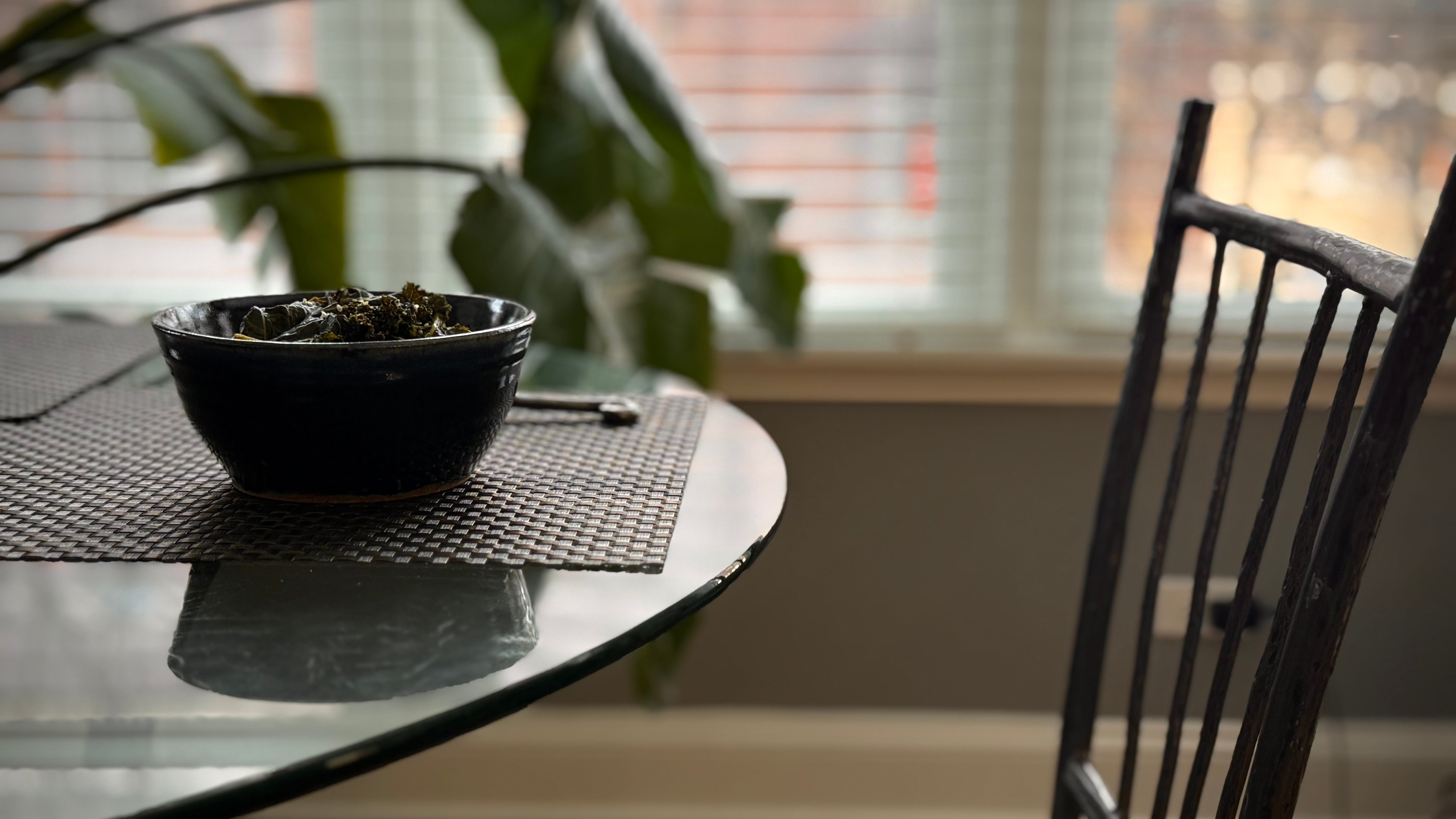
Your Body’s Boardroom has a meeting. Daily. Same time.
It’s not with your boss, your spouse, or your kids.
It’s with you.
And you keep skipping it.
You reschedule. You squeeze it between other things. You show up but check your phone the whole time. Or you ghost entirely, again, and promise yourself you’ll make the next one.
The interesting part is what that reveals.
Every time you eat standing at the counter, inhale your food between calls, or skip lunch because you “didn’t have time,” you are practicing a hierarchy.
Everyone else’s demands stay fixed.
Yours stay flexible.
Do that often enough and it becomes so ordinary you stop noticing you’re doing it.
By 3pm, you may notice the costs.
Fog. Irritability. Reaching for caffeine. Doing the easy task instead of the work you meant to do. Feeling strangely resentful that everyone still needs something from you.
When that happens, I want you to look at more than what was on the plate.
What happened around lunch?
Did you stop?
Did you sit?
Did you protect the time?
Or did your own meal become the thing that moved because everything else felt more important?
Your 3pm gives you something to investigate.
And lunch gives you one concrete place to start.
This is what living by other people’s clocks can look like: your attention, pace, and priorities keep getting set by the loudest demand in the room.
Eventually you feel like an intern running errands for everyone else’s schedule.
The cost of skipping
Here’s the question I care about:
What becomes possible when your own capacity stops being the flexible part of the schedule?
Start with one lunch.
Sit down for 15 minutes.
No screen. No multitasking.
Protect it the way you would protect a meeting with someone whose time mattered.
Then notice what happens.
The lunch itself gives you information.
So does the discomfort around protecting it.
Your to-do list may scream.
Your inbox may pulse.
You may suddenly remember six things that feel more urgent.
Good.
That friction is useful.
It shows you where your own needs have been negotiable and everyone else’s urgency has been protected.
Lunch becomes a very small place to practice something much bigger:
I decide when I eat. I decide how I eat. My own capacity gets a place on the calendar too.
“But I’m overbooked. What does a warm lunch have to do with my to-do list?”
Fair.
You may not control when a client calls, when school pickup happens, or how much is already sitting on your calendar.
That’s exactly why lunch is useful.
It gives you one small, repeatable place to see what happens when your own capacity stops being the first thing that moves.
You don’t have to believe that protecting lunch will change the rest of your day.
Try it. Then read what happens afterward.
There’s a larger culture around this too.
We’ve made working through lunch look responsible. Eating at the desk looks committed.
Being too busy to stop can even feel like evidence that what we’re doing matters.
So protecting lunch can feel strangely rebellious.
I see another possibility.
The most successful CPA I know protects his lunch like a high-value client meeting. Morning workout, midday pause, focused afternoons.
His clients don’t get the version of him who worked straight through because stopping felt indulgent. They get the version who built a pause into the day on purpose.
That’s the experiment I’m interested in.
What changes when lunch stops being the appointment you cancel first?
I’ve seen this in my own life too, from the other side.
When I skip this practice, I notice it.
Lunch gets pushed. I keep working. And by afternoon I’m more likely to feel tired, overwhelmed, and less clear in my decisions.
I say yes faster. I have less patience.
I’m more likely to meet people I love from whatever is left rather than from presence.
Twenty years of practicing this has made one thing very clear to me:
When I keep canceling the meeting, the rest of my day feels different.
That’s why I treat lunch as more than food.
It’s a practice of internal authority.
When I sit, breathe, chew, and stay for 15 minutes, I’m practicing:
I decide when I eat.
I decide how I eat.
I don’t automatically hand this time over to the next demand.
What showing up actually means
Warm, on-time, seated is the version I use.
Warm because that’s the food rhythm I’ve practiced and taught for years.
On time because waiting until I’m depleted changes the kind of choice I’m making.
Seated because stopping long enough to eat lets me notice the state I arrived in.
Was I rushing?
Was I irritated that I had to stop?
Did I reach for my phone before I had taken three bites?
Was I already thinking about what I needed to do next?
That’s useful information.
Lunch becomes a checkpoint in the middle of the day.
I can see what the morning left me carrying before I take all of it into the afternoon.
And then I can compare.
What happens at 3pm on the days I protect this meeting?
What happens when I don't?
Which parts seem connected?
Which don’t?
That’s the experiment.
The power of warmth
Ayurveda puts particular value on warm, cooked food and describes it as supportive to digestion.
It’s also what I’ve practiced and taught for years.
I don’t need you to take that on faith.
Try the same lunch rhythm for several days.
Warm. On time. Seated.
Then read your afternoon.
Clearer or foggier?
Steady or dipping?
Present or reaching for something to carry you through?
You’re looking for your pattern.
The meeting gives you one repeatable place in the day to stop, choose deliberately, and collect data about what follows.
What the meeting shows you
When you actually sit down and pay attention, lunch becomes a mirror.
It shows you:
Where you’re depleted. Do you inhale your food like someone’s about to take it? Reach for your phone mid-bite? Feel like you “don’t have time” for 15 uninterrupted minutes? That’s data. Look at what happened before lunch and what you were already overriding.
Where you’re outsourcing. Are you eating what’s convenient, or what you actually wanted? Are you grabbing whatever’s fast because you didn’t make a decision earlier? Notice where default has replaced choice.
Where you need to adjust. Is your morning so packed that lunch feels like a disruption instead of a rhythm? Are you arriving at noon already behind, frantic, or depleted? The meeting shows you what may need attention upstream.
You don’t need an app to track this. You don’t need a food journal or a macro calculator. You need to show up and notice.
The meeting you’ve been waiting for
Here’s what I’ve learned after two decades of this practice:
Lunch gives me one place in the middle of the day to stop and say:
I matter enough to sit down.
That practice reaches far beyond food.
It teaches me to notice when I’m about to override myself.
It gives my own signals a place in the decision.
It reminds me that everyone else’s urgency does not automatically get first claim on my time.
And one protected lunch is only one point in the day.
That’s where the Four Anchors come in.
The Four Anchors
The Four Anchors give you four places to return:
Wake-up: notice how you’re entering the day.
Lunch: stop long enough to nourish yourself and protect the meeting.
3pm: read what the first part of the day produced.
9pm: notice what you’re carrying forward and what you’re ready to put down.
You don’t have to perform all four perfectly.
Start with the one you can see.
For me, lunch was the doorway.
Protect it for a few days.
Notice the friction around it.
Read your 3pm.
See what repeats.
Then let the rest of the day into the picture.
If you want help seeing that whole pattern, take the Day in the Life Diagnostic.
Your lunch is one data point.
Your day tells you more.
Eat warm, breathe slow, keep a rhythm.
—Savitree