


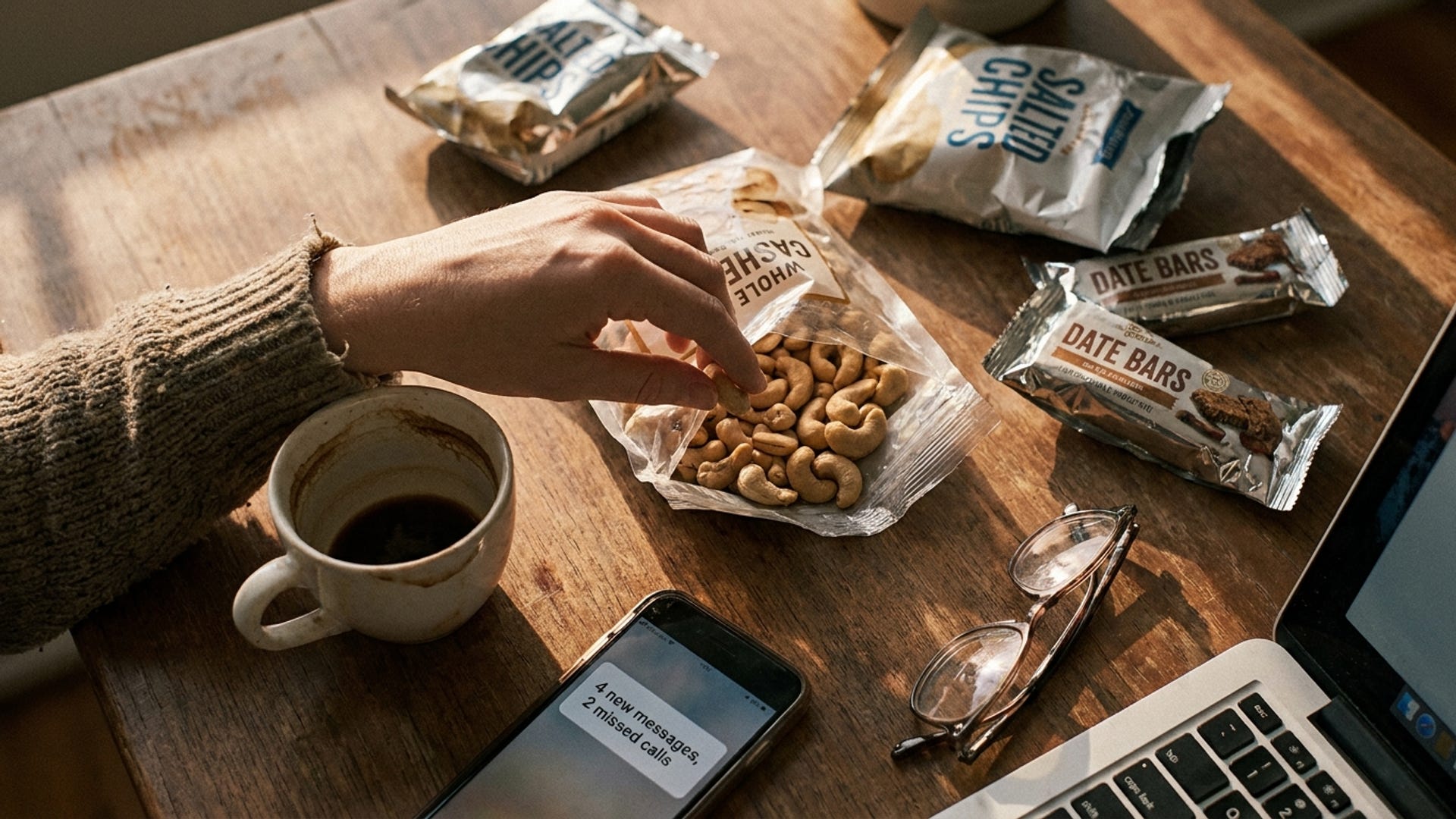
3pm. Again.
When I start feeling scattered, foggy, or like I need something right now, I pay attention to what I’m reaching for.
Sugar? Coffee? Something salty? Bread?
Another snack even though I ate not that long ago?
I don’t treat the craving like an instruction.
Instead, I treat it like information.
Sometimes I really am hungry.
Sometimes lunch was too small, too late, or never happened.
Sometimes I’m tired.
Sometimes I want stimulation, relief, comfort, or a reason to stop working for five minutes.
And sometimes the simplest useful answer is:
Eat a real meal.
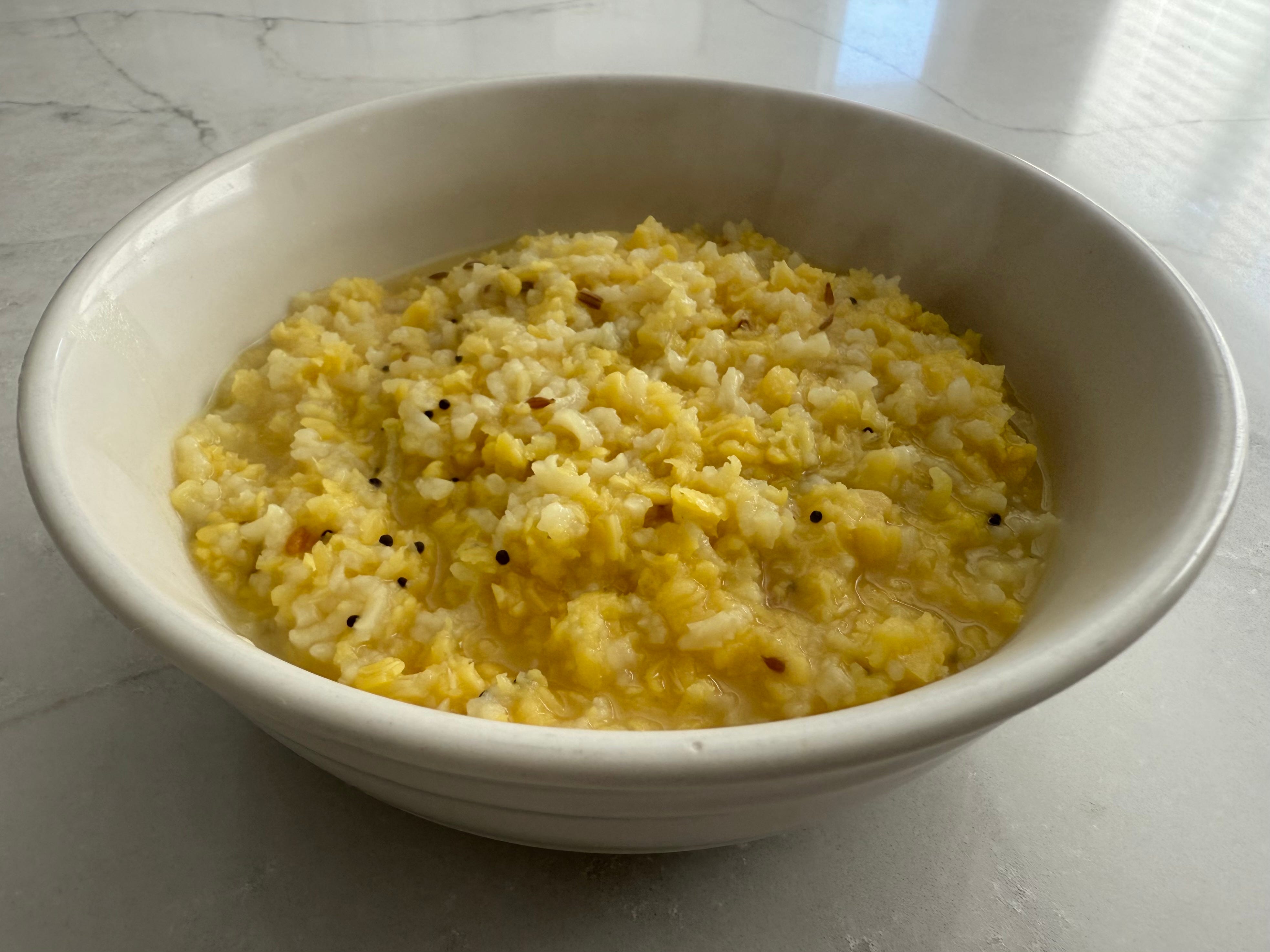
For me, that meal is often kitchari.
Kitchari
If you’ve never had it, think simple.
Rice. Split mung beans. Spices. Ghee. Vegetables if you want them.
One pot. Warm.
Easy to batch. Easy to reheat.
Easy to return to when deciding what to eat feels like one decision too many.
Kitchari comes from the Ayurvedic tradition, where it has long been used as a simple, warm meal when people want to simplify food and digestion.
It’s also one of the meals I’ve returned to for years.
I like it because I don’t have to make it exciting.
I don’t have to optimize it.
I make the pot. I sit down. I eat.
Then I notice what happens afterward.
Am I satisfied?
What does 3pm feel like?
Am I looking for another snack an hour later?
Do I feel steady, heavy, hungry, clear, foggy?
That’s the useful part.
The meal gives me something concrete to test.
Yes, I’m a fan.
When you reach for comfort
Picture the moment:
You’re stressed, scattered, or tired and suddenly food feels urgent.
Before you decide what the craving means, give yourself a minute to read it.
Here are four things to do:
Pause long enough to ask what you need.
Am I hungry? Thirsty? Tired? Looking for stimulation? Trying to get relief from something I don’t want to deal with?
You don’t need to diagnose yourself. Just notice what’s asking for attention.
Drink some water. Mine is warm or hot. I don’t do iced water.Look for the unfinished thing.
Sometimes the discomfort around food has very little to do with food.
There may be an email you need to send. A conversation you’re avoiding. A decision you keep circling. A draft that needs to leave your laptop.
If one concrete action would reduce the static, take it.
Make the call. Send the draft. Ask for help.
Then notice whether the urge changed.If you need food, eat a real meal.
This is where I often reach for something simple, warm, and easy to repeat.
Kitchari is one option.
Soup. Rice and vegetables. Warm leftovers. Something that feels like an actual meal rather than another pass through the snack drawer.
Sit down. Put the screen away. Eat.
Then read what happens afterward.Use the craving as data.
If you keep reaching for food at the same time every day, look back.
What happened at lunch? Was it enough? Was it late? Did you actually stop to eat? Were you hungry again, or were you looking for comfort, stimulation, or a break?
You’re looking for a pattern.
That’s what the 5-Day Digestion & Energy Reset gives you a chance to test.
For five days, simplify the food rhythm enough that you can actually notice what changes.
What you’re actually testing
When a simple meal rhythm becomes familiar, food gets quieter.
You spend less time renegotiating what to eat every time you’re tired, stressed, hungry, or overwhelmed.
And that gives you something useful:
a cleaner read on what your body is asking for.
One reader, Alenka, described her own experience after practicing warm lunch:
I’ve been exhausted in every conceivable way for 2 years. One week of warm lunch and I’m singing and dancing again.
Your experience may look different.
That’s why I want you to test it.
On the days you reach for comfort, choose something simple enough that you can actually notice what happens next.
For me, that’s often a warm bowl of kitchari.
Then read the afternoon.
Hungry again quickly? Satisfied? Heavy? Clear? Foggy? Still reaching for something?
That’s your data.
Try it for five days
I made the 5-Day Digestion & Energy Reset so you don’t have to figure out the experiment from scratch.
You’ll get the kitchari base recipe, variations for different constitutions and seasons, and a simple food rhythm to practice for five days.
The goal is to simplify enough that you can actually notice.
What happens to your hunger? Your cravings? Your 3pm? Your relationship with stopping long enough to eat?
Then tell me what you noticed.
Eat warm, breathe slow, keep a rhythm.
— Savitree
Last year my boyfriend got sick and I did a Kitchari, I did not have my best recipe and not all of them are good enough but this is so warmi g to find a writing about the benefits of it. Eating kitchari is so dosha balancing whenever you are sick :)
After throwing countless options to the question of what to cook? Me and my wife often settle with Khichdi. 😀
Ultimate comfort food.